

One year on: Building EUP OHAMR together
One year ago, we gathered in Brussels to launch EUP OHAMR and and embark on an ambitious ten-year journey. As we mark our first anniversary, Shahida Syed, Head of the EUP OHAMR Secretariat, reflects on our first year, why partnership matters for AMR, and her hopes for what we can achieve together in the years ahead.
One year ago, on 22–23 September 2025, we gathered in Brussels for the kick-off of the European Partnership on One Health Antimicrobial Resistance (EUP OHAMR).
There was a real sense of both opportunity and responsibility in the room. We were launching a ten-year European Partnership bringing together organisations and countries around one of the most complex global health challenges we face today: antimicrobial resistance (AMR).
Twelve months later, it feels like the right moment to reflect not only on what we have done, but on what we are building together – and why it matters.
From establishing a Partnership to putting it into action
The first year of any major partnership is necessarily about building foundations. For EUP OHAMR, that has meant turning an ambitious programme on paper into a functioning international partnership.
Over the past year, we have established our governance and ways of working, launched our first Joint Transnational Call, held our first Annual Meeting, established our scientific and strategic advisory structures, begun the development of our Stakeholder Forum, and advanced activities spanning research funding, capacity strengthening, data, policy, communication, innovation and impact.
We have also welcomed two new partners and strengthened connections with organisations and initiatives across the wider AMR, One Health and research and innovation ecosystem in Europe and internationally.
Behind these milestones has been a great deal of work, including navigating different organisations, national systems, priorities and working cultures. Perhaps my strongest reflection from this first year is that a partnership is not simply created through agreements or governance structures. It has to be built continuously through relationships, trust, shared purpose and, sometimes, compromise. It is on these foundations that we now build. The real measure of EUP OHAMR will be what this Partnership enables over the coming decade.
Why partnership matters for AMR
AMR makes the limitations of working in silos particularly visible. This is precisely why tackling AMR through a One Health lens is a necessity.
Resistance moves between humans, animals and the environment. Its drivers span healthcare, food systems, agriculture, veterinary medicine and environmental systems. Addressing it requires expertise ranging from microbiology and clinical research to social sciences, economics, implementation science, policy and innovation.
The same is true geographically. AMR does not respect borders, and addressing the research questions and developing the solutions needed requires collaboration across countries.
This is where EUP OHAMR has an important role.
By bringing together research funders, ministries, public authorities, researchers, policymakers and stakeholders over ten years, we have an opportunity to align national and shared priorities, coordinate investment, sustain commitment to AMR, build capacity, connect knowledge across sectors and countries, and strengthen the pathways through which research contributes to policy, practice and innovation.
That ability to take a long-term view is one of the Partnership’s greatest strengths, as addressing AMR requires sustained action over time.
Research must ultimately contribute to change
Another reflection from this first year is that our ambition must be both to support excellent research and to strengthen the pathways through which that research translates into impact.
We need to think from the outset about how knowledge can be used and what is needed to move from evidence to impact. This means reinforcing the science-policy interface, connecting researchers with policymakers, practitioners, innovators, patients and other end-users, and supporting implementation, innovation and the effective use and reuse of research data.
That perspective also needs to extend beyond Europe. AMR is inherently a global challenge, and EUP OHAMR sits within a much wider research and innovation ecosystem. We have an important opportunity to develop meaningful international connections, learn from different contexts and approaches, and ensure that our work both contributes to and benefits from the wider global AMR response.
Ultimately, we need to ensure that the research we support is connected to the needs of society and can contribute to meaningful and lasting change.
From foundations to delivery
Our first year has largely been about establishment and mobilisation. The coming years must increasingly be about delivery and connection.
As we move into this next phase, our focus shifts to delivering on our shared ambitions, learning and adapting as we go, and demonstrating the value of sustained collaboration on AMR.
We have an opportunity to establish EUP OHAMR as a central platform for One Health AMR research and innovation, but this also means remaining ambitious about what we can achieve together. Our joint research calls are fundamental to the Partnership, but its ten-year horizon gives us the opportunity to build on them: strengthening the wider AMR research ecosystem, creating connections that individual organisations, programmes or countries would struggle to create alone, and maximising the value and impact of our combined efforts.
A collective achievement – and a thank you
Perhaps most importantly, this anniversary is an opportunity to recognise the people behind the Partnership.
EUP OHAMR exists because organisations across many countries, together with the European Commission, have chosen to invest in AMR over the long term – not only funding, but also expertise, time and trust in a shared ambition. Much of the work involved in building a partnership happens behind the scenes, through the everyday commitment of people across our organisations who make this collaboration work.
I therefore want to extend a sincere thank you to all our partners and the many colleagues contributing across our work packages and activities, as well as to our colleagues at the European Commission for their continued support, engagement and dialogue. Your commitment is what makes this Partnership possible.
A particular thank you goes to our Coordination Unit and work package leaders, who have carried an enormous amount of responsibility during this first year and helped translate the Partnership’s ambitions into action.
I would also like to thank – and welcome – the members of our Strategic Board, Scientific Advisory Board, External Ethics Advisory Board and Stakeholder Forum, as well as the many organisations and individuals engaging with us externally. Their perspectives will be essential in ensuring that our work remains scientifically strong, strategically relevant and connected to societal needs.
Finally, a very personal thank you to the EUP OHAMR Secretariat at the Swedish Research Council. Establishing a new European Partnership while simultaneously beginning to deliver it has required flexibility, persistence and an extraordinary amount of work. I am immensely grateful for the commitment of the team, and it is a real privilege to work alongside you.
Looking ahead
When we met in Brussels a year ago, EUP OHAMR was at the beginning of a ten-year journey.
One year later, we are a growing community with a shared strategic direction and an increasingly clear sense of what we can achieve together.
There is still a great deal ahead of us. We will continue to learn and adapt, and undoubtedly encounter new challenges along the way. That is part of building something of this scale and ambition.
But there is also enormous opportunity.
The first year was about creating the Partnership.
The years ahead are about what we can achieve through it.
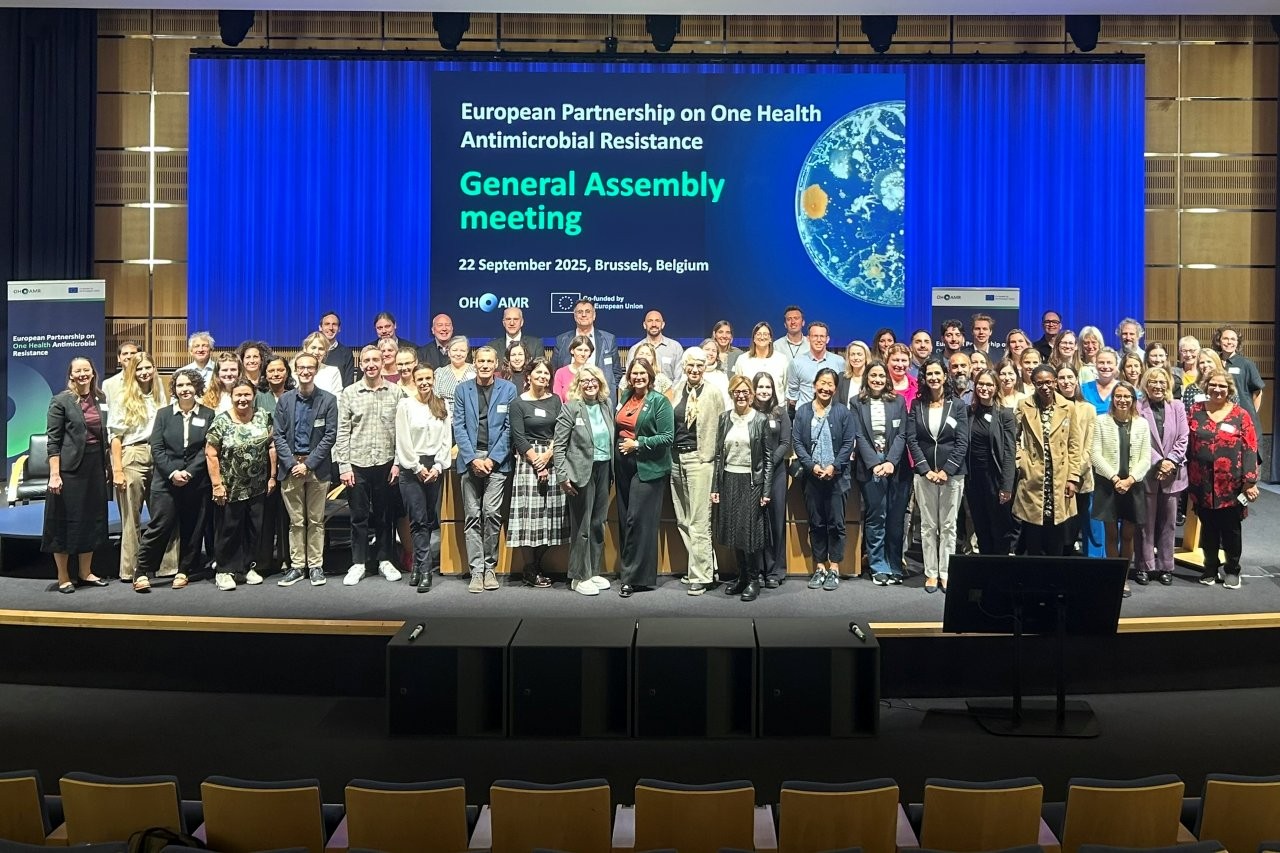
The EUP OHAMR General Assembly at the kick-off in Brussels 2025.